0914-8888850
021-22387869
0914-8888850
02122387869
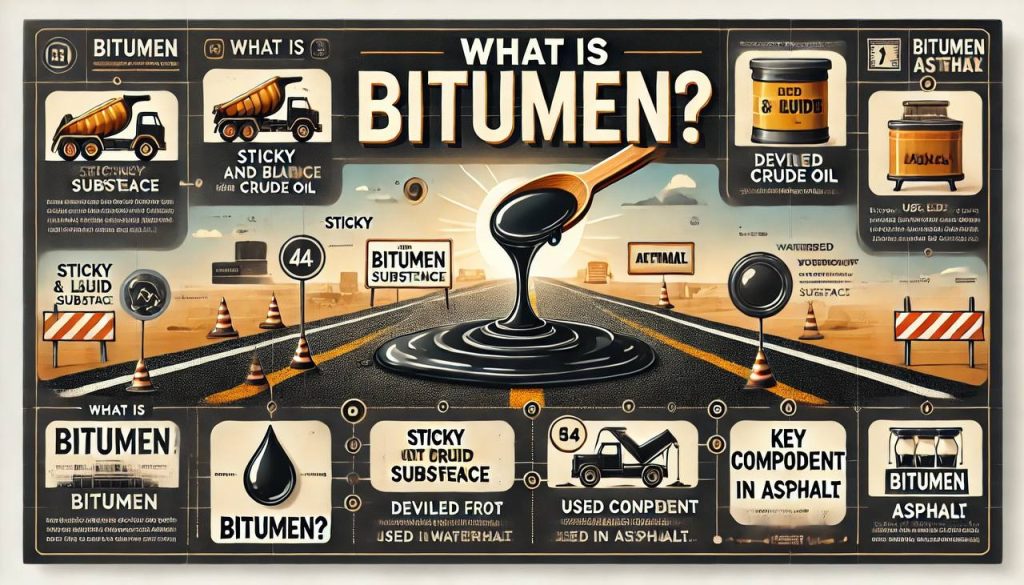
Bitumen is a black, sticky, and waterproof substance that remains solid or semi-solid at room temperature. It is primarily derived from crude oil, though natural forms of bitumen can also be found in certain regions, such as lakes and mines. Bitumen is one of the most essential and versatile materials used in road construction, building insulation, waterproofing, and exports.
The most common type—petroleum bitumen—is produced through the distillation of crude oil in refineries. After lighter fractions like gas, gasoline, and diesel are separated, the leftover heavy residue is processed into bitumen.
Chemically, bitumen is a complex mixture of heavy hydrocarbons, resins, asphaltenes, and other organic compounds. This unique structure gives bitumen its key properties: adhesion, water resistance, and thermal stability.
Bitumen is generally categorized into two main types:
Formed over millions of years from the decomposition of organic matter, natural bitumen is found in specific regions—such as Trinidad’s Pitch Lake or bitumen mines in Ilam, Iran. It has higher purity compared to petroleum bitumen and is used in premium applications like high-quality insulation, paints, and exports.
This type is produced from the residue of crude oil distillation. It is classified based on properties such as penetration grade or viscosity.
For example, bitumen 60/70 is a widely used type in asphalt and paving projects.
• Oxidized Bitumen (Blown Bitumen):
Produced by blowing hot air into petroleum bitumen. It is harder and more heat-resistant, ideal for waterproofing and insulation.
• Cutback Bitumen:
Made by dissolving bitumen in petroleum solvents like gasoline or kerosene. Commonly used in cold climates.
• Bitumen Emulsion:
Bitumen is dispersed in water in the form of tiny droplets. It’s suitable for cold mix asphalt and wet environments.
1. Road Construction and Asphalt
Over 80% of global bitumen production is used in road construction. It acts as a strong binder that holds aggregates together, offering resistance to pressure, wear, and water penetration.
2. Building Waterproofing
Due to its excellent waterproofing properties, bitumen is widely used for insulating rooftops, bathrooms, water tanks, swimming pools, and foundations.
3. Membrane Sheets (Bituminous Waterproofing / Membranes)
Bitumen is a primary component of bituminous membranes (e.g., “isogam”), which combine bitumen with polyester or fiberglass layers to create durable, easy-to-install waterproofing solutions.
4. Exports and Petrochemical Industry
Iran is one of the largest bitumen producers and exporters in the region. Iranian bitumen is exported to numerous countries including India, China, Turkey, African nations, and those in the Persian Gulf.
Bitumen may look simple, but it has a complex chemical structure and wide-ranging applications. Understanding its types, characteristics, and uses helps improve project quality, extend service life, and boost export opportunities. Bitumen continues to be a vital material in both construction and industrial sectors worldwide.