0914-8888850
021-22387869
0914-8888850
02122387869
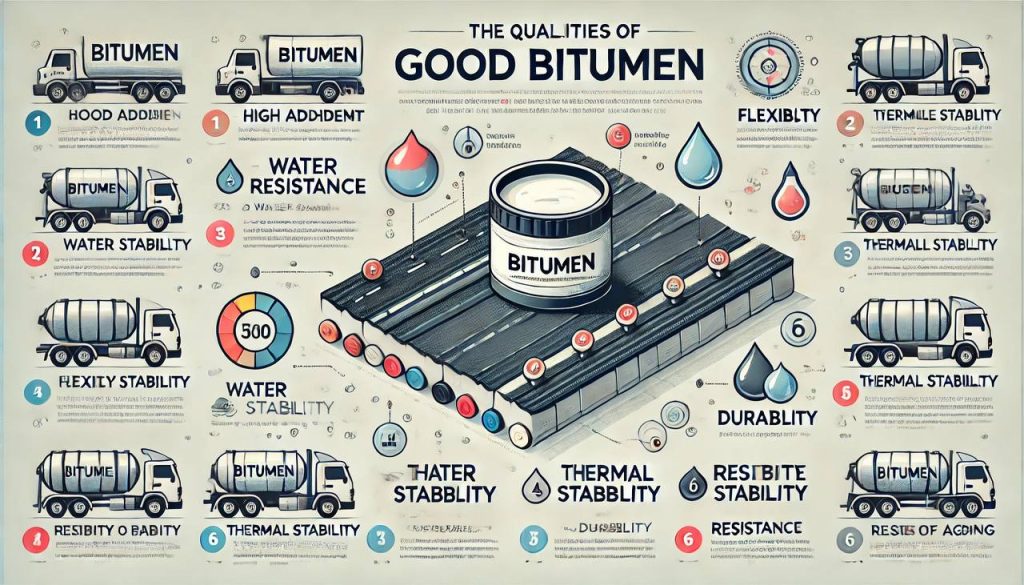
The performance and durability of bitumen in applications such as road paving, waterproofing, and membrane production depend heavily on its physical and chemical characteristics. Below is a comprehensive breakdown of what defines high-quality bitumen.
1. Strong Adhesion
Bitumen must have excellent adhesion to materials like aggregates, metal, concrete, or fiberglass. Good bonding ensures the different layers in asphalt or waterproofing membranes remain firmly connected over time.
2. Water Resistance
High-quality bitumen is completely waterproof. It must resist moisture penetration, which is especially crucial for building insulation and protecting structures from rain, humidity, or water leaks.
3. Thermal Stability (Resistance to Heat and Temperature Changes)
Bitumen should not melt, flow, or become too soft in high temperatures. Similarly, it should not crack or become brittle in cold conditions. A good bitumen offers a wide service temperature range to adapt to both hot and cold climates.
4. Flexibility at Low Temperatures
In colder environments or areas with significant day-night temperature shifts, bitumen must remain flexible to prevent cracking or failure. Flexibility helps absorb stress without damage.
5. Chemical and UV Resistance
Good bitumen resists chemical reactions and environmental degradation. It should be stable against oxidation, sunlight (UV rays), and air exposure, ensuring a long service life.
6. Mechanical Strength and Wear Resistance
Especially in road construction, bitumen must withstand heavy traffic loads, pressure, and surface friction without deforming or deteriorating. Resistance to wear and tear is essential for long-lasting performance.
7. Optimal Viscosity (Flow Behavior)
Bitumen should have a viscosity that allows easy handling and application but remains stable and strong after being applied. The right viscosity ensures proper coating and performance.
8. Purity and Absence of Volatile Compounds
High-quality bitumen should be free from light oils or volatile substances. These impurities can cause unpleasant odors, shrinkage, early aging, or surface cracking.
9. Aging Resistance
Over time, bitumen can dry out, harden, or lose its elasticity. A good bitumen must resist thermal aging and photo-oxidation, maintaining its properties throughout its lifespan.
A good bitumen combines mechanical strength, chemical resistance, thermal stability, and flexibility Selecting the right type of bitumen based on your project—whether it’s for paving, waterproofing, or export—is essential for achieving long-term performance and durability.