Bitumen Production Process in Refineries – Explained Simply
1. Crude Oil Enters the Refinery
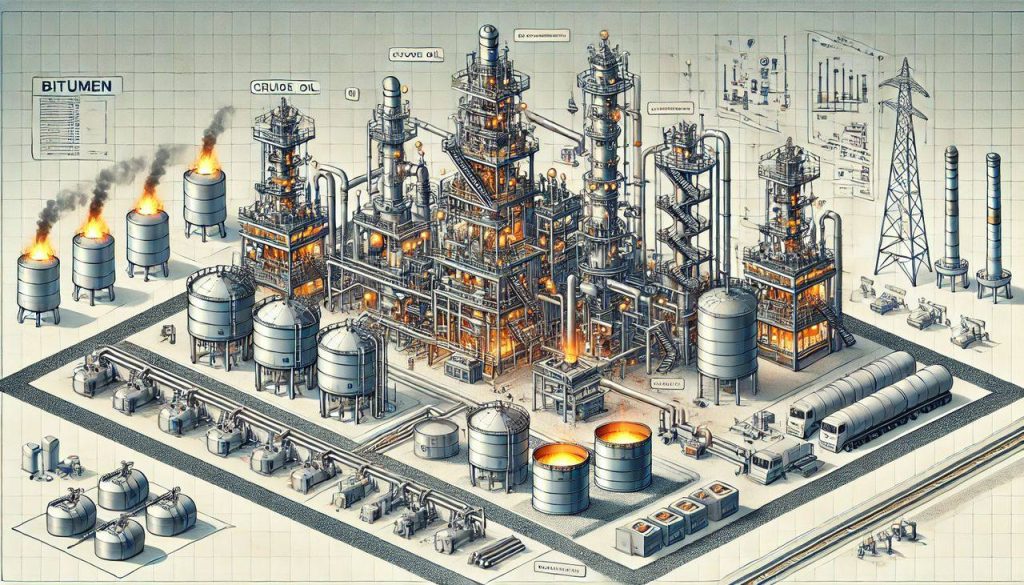
Crude oil is extracted from oil wells and transported to refineries through pipelines or oil tankers Crude oil contains a mix of light and heavy components—such as gasoline (light) and diesel, lubricants, and bitumen (heavy).
2. Atmospheric Distillation of Crude Oil
the first step is atmospheric distillation. Crude oil is heated to around 350–400°C in a tall distillation column.
• Lighter components like gas, gasoline, kerosene, and diesel evaporate and are collected at the top of the column.
• Heavier materials remain at the bottom—this thick, dark liquid is called residual oil or mazut.
3. Vacuum Distillation
Mazut still contains useful heavy components that can be turned into bitumen. It’s sent to a second unit called the vacuum distillation column. • In this column, pressure is reduced so distillation can occur at lower temperatures—avoiding thermal cracking.
• The result is a thick substance called vacuum bottom or vacuum residue, which is the base material for making bitumen.
4. Turning Vacuum Bottom into Bitumen
Vacuum bottom is technically already a type of bitumen. But to make it suitable for various applications, it’s further processed in two main ways:
a) Air Blowing Process
In this method, hot air (around 200–300°C) is blown into the vacuum bottom. This process:
• Makes the bitumen harder and more durable.
• Increases its resistance to heat and improves adhesive properties.
• Produces oxidized bitumen (also known as blown bitumen), which is commonly used in waterproofing and roofing (like in membranes and insulation).
b) Adding Polymers (for Modified Bitumen)
Sometimes, polymers or chemical additives are mixed with bitumen to improve:
• Flexibility
• Resistance to cracking
• Durability against temperature changes
This is how polymer-modified bitumen is created, ideal for roads with heavy traffic or harsh climates.
5. Storage and Packaging
The final bitumen is either:
• Stored in heated tanks and transported directly to construction sites, or
• Packed into drums, bags, or custom containers for export or domestic use.
In Summary
Bitumen is the final, heavy residue from crude oil refining. After lighter fuels are removed, what’s left is carefully processed into bitumen. Depending on the application—road paving, waterproofing, or industrial uses—bitumen can be modified to meet specific performance requirements.